
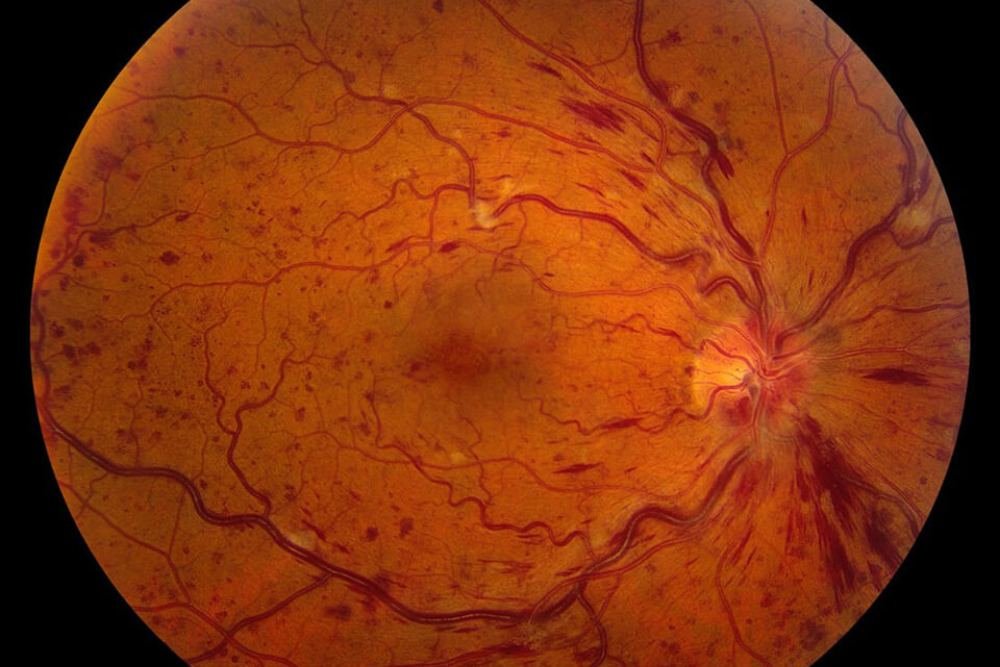
What is diabetic retinopathy?
The retina is the light-sensing layer at the back of the eye. Over time, high blood sugar damages its small blood vessels. They can leak fluid and blood, close off, or be replaced by fragile new vessels that bleed. Left untreated, this can lead to permanent loss of vision. Anyone with type 1 or type 2 diabetes can develop it; the risk rises with longer diabetes and with poorly controlled sugar, blood pressure and cholesterol.
Often no symptoms early on. Many people only notice blurring, floaters or dark patches once the disease is advanced. That is why a yearly dilated eye check matters even when your vision feels fine.
Stages of diabetic eye disease
| Stage | What is happening | Usual approach |
|---|---|---|
| Non-proliferative (mild to moderate) | Small bulges and leaks in retinal vessels. | Regular monitoring; control sugar, BP and cholesterol. |
| Severe non-proliferative | Widespread vessel damage; high risk of progressing. | Closer review; laser may be considered. |
| Proliferative | Abnormal new vessels that can bleed or pull on the retina. | Panretinal (PRP) laser, sometimes with injections. |
| Diabetic macular oedema | Swelling at the centre of vision; can occur at any stage. | Eye injections and/or focal laser, depending on type. |
Diabetic eye screening
A screening visit includes a vision check, eye pressure and a dilated examination of the retina, sometimes with retinal photographs or a scan of the macula. People with diabetes should have this at least once a year. Bring your glasses, your list of medicines and your latest HbA1c result if you have it.
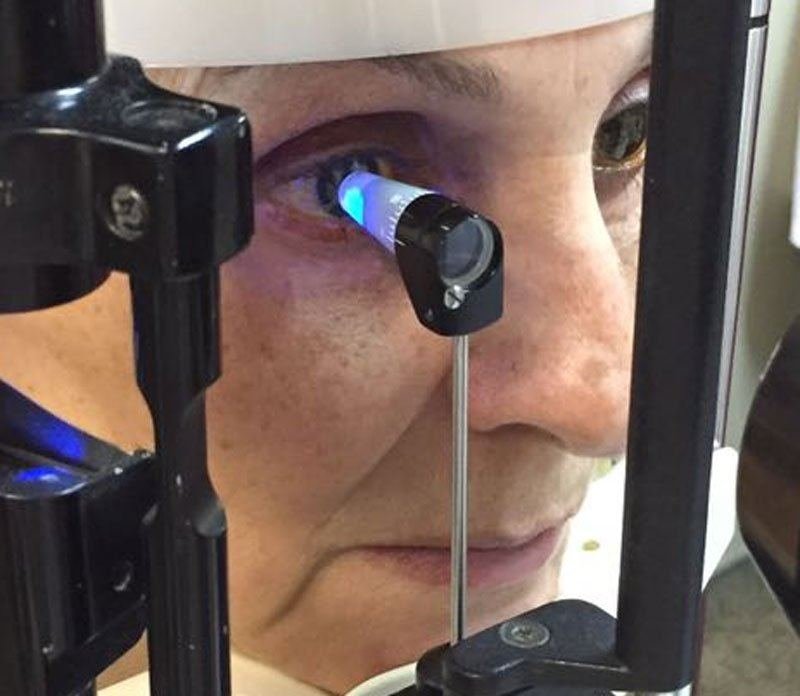
Laser treatment for diabetic retinopathy
Retinal laser is done in the clinic, usually in 15 to 30 minutes. After numbing drops, you sit at a machine similar to the one used for your eye examination, and a special contact lens is placed on the eye to focus the laser.
Panretinal photocoagulation (PRP)
Used for proliferative or high-risk retinopathy. Many small laser spots are placed on the outer retina. This reduces the signals that drive abnormal vessel growth and lowers the risk of bleeding and severe vision loss. PRP is often done over two to four sessions.
Focal or grid laser
Used for some types of diabetic macular oedema. Fine laser spots target leaking vessels near the centre of vision to reduce swelling.
After laser treatment
- Vision is dazzled and blurred for a few hours. Don't drive yourself home.
- A mild ache can be eased with simple painkillers such as paracetamol.
- Most people go back to normal activities the next day.
- After PRP, some people notice reduced side vision or poorer night vision. This is a trade-off for protecting central vision.
- Keep all follow-up visits; further treatment is sometimes needed.
Seek help urgently for a sudden shower of floaters, a curtain over your vision or sudden loss of vision.
Other treatments
Laser is one of several treatments. Eye injections are commonly used for diabetic macular oedema and sometimes alongside laser. Surgery (vitrectomy) may be needed for bleeding inside the eye or retinal detachment. In every case, working with your GP or endocrinologist on blood sugar, blood pressure and cholesterol control slows the disease. People with diabetes also tend to develop cataracts earlier, and these are assessed at the same visit.
Diabetic eye laser FAQ
How often should people with diabetes have an eye check?
At least once a year if no diabetic eye disease has been found, and more often if it has. Women with diabetes who become pregnant need closer checks during pregnancy.
Does retinal laser for diabetic retinopathy hurt?
The eye is numbed with drops first. Most people feel only flashes of light; panretinal laser can cause some aching or stinging during treatment, which settles afterwards.
How many laser sessions will I need?
Panretinal (PRP) laser is often split into two to four sessions a few weeks apart. Focal laser for macular oedema is usually one session, repeated if needed. Your plan depends on how much treatment the retina needs.
Will laser treatment improve my vision?
The main aim is to stop diabetic retinopathy getting worse and to prevent serious vision loss. Vision lost before treatment may not fully return, which is why early screening matters.
Can I drive after retinal laser?
No. Your pupils will be dilated and your vision dazzled for some hours. Please arrange for someone to drive you home.
Is laser the only treatment for diabetic retinopathy?
No. Eye injections are often used for diabetic macular oedema and sometimes combined with laser, and surgery (vitrectomy) is used for bleeding or retinal detachment. Good control of blood sugar, blood pressure and cholesterol is important in every case.
Do I need to fast before a diabetic eye check?
No fasting is needed. Take your usual diabetes medicines and eat normally, and bring your latest HbA1c result if you have it.
Book a diabetic eye check
Eye Centre, Level 1, Heritage Wing, Assunta Hospital, Petaling Jaya